

At least once a week, a question comes across my computer screen about how to back-up solar power on cloudy days or at times during the year when there just isn’t enough sunshine available. This is not a question about the merits of solar power on a boat. It’s a question about how to create a sensible back-up alternative source of electrical power when moored or at a dock.
The other day, I noticed an interesting post on Facebook in which a sailor/DIY-craftsman was speculating about assembling a small diesel engine to run a standard alternator to provide 110vac current at times when the solar power system on his sailing auxiliary doesn’t keep up with demand. He opined that such a rig would be preferable to using his inboard propulsion engine in lieu of a stationary genset in such circumstances. He said,
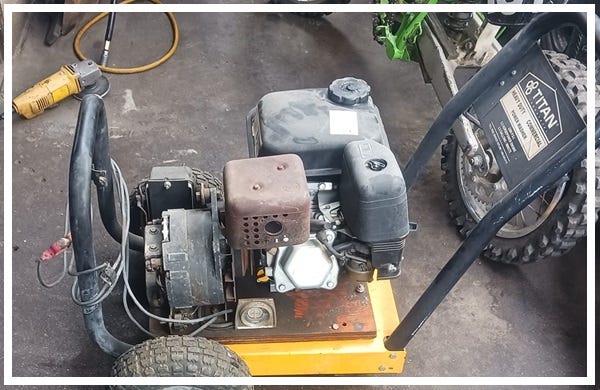
Here is a 5 HP gas engine hooked up to an alternator 120 amp 12 volt, but I want to build one that is the same alternator but with a small diesel engine on it to put on my sailboat. My sailboat does have solar on it but there are days when it is overcast and the solar panels cannot keep up. I think this is a better alternative than running the engine. Would like some comments on this what do you think of it.
— Bruce Gripp, (https://www.facebook.com/groups/Sailing/permalink/3645167569056556)
I commented that while it might not be a bad idea, I thought there was a better solution — one which avoids adding the weight of a second engine, yet still avoids the potential problems a propulsion engine might suffer if used for extended periods of time as a stationary electrical generating plant. Here’s what I wrote:
If it were me, I’d look at the possibility of adding a second high-output alternator with a simple clutch to the propulsion engine for stationary battery charging. With a small engine, a high output alternator will by itself provide sufficient load to prevent the engine from running under-loaded and possibly coking up. While clutching out that load when running under power will avoid potentially overloading the engine when using it for ship’s propulsion.
The advantages of solar power are numerous. But there are times and circumstances when a more-or-less average solar power system won’t generate enough current to meet demand. So it makes sense to have a back-up available. A wind generator would be, IMO, too mechanically complicated and have too little output for the application in question. Moreover, such units are pretty bulky and almost as costly as a stationary liquid-fueled genset.
Against that, the back-up generating system outlined above could be economically fabricated using mostly off-the-shelf parts. The only slightly thorny issue might be finding an appropriate clutch to enable the high-output alternator to free-wheel when not being pressed into service. But since a simple mechanical clutch would do, I that issue should be relatively straightforward to resolve. And my guess is the cost to fab and install the setup envisioned would overall be less than building a makeshift genset. It would also— be significantly lighter and more compact than other alternatives since it would require only enough space for a second alternator.
I don’t at this point know if there is a proprietary manufactured system of the type currently on the market. But if there is enough interest among our readers, we’ll follow up with a search. And we’ll see if an engineer or two among our membership might draw up some plans and specs for a custom fabrication and installation. So do let me know what you think.
— Phil Friedman
Text Copyright © 2023 by Phil Friedman ― All Rights Reserved.
Image credit - Bruce Gripp
I'm surprised nobody has responded to this. I am interested in the answer. I've been shopping for a boat for about 2 or 3 years. Not ready to jump, but I am always looking. I am always pleasantly excited when I see a boat has a built in genset in addition to the main propulsion motor, but those aren't as frequent on the size of boat I am looking to purchase. I'm thinking a Brewer 44 and a genset, based on my searches, doesn't come with that model. I look forward to an answer to this question.